


Almost everyone on safari in southern Africa hopes to see an elephant. Only a handful of people come knowing they’d like to see the ‘butterfly-leaf’ or mopane (pronounced mo-pah-nee) tree. Yet both of these species are individually fascinating, instantly recognisable, and very characteristic of safari landscapes in southern Africa. And indeed, the lives of elephants and mopane trees are intricately entwined.
Mopane trees are slow-growing trees best suited to hot, dry climates. Their distribution in southern Africa is constrained by high rainfall to the north, and frost to the south, so they are found in a geographically narrow band stretching from southern Angola and northern Namibia in the west, across the sub-continent through Botswana, southern Zambia, and Zimbabwe to the lowveld of South Africa in the east. In many places, mopane – like elephants – dominate the landscape in their range.
Mopane often grow in dense, homogeneous stands, with few other plant species present. Sometimes these stands are of soaring trees, forming ‘cathedral’ forests. Sometimes they are an endless sea of short, scrubby bushes, all kept to the same height by some limiting factor, such as annual frosts, insufficient soil moisture, or continual browsing by elephants. Scientists are not sure why mopane trees are able to exclude other plant species from their surroundings, but they often do. One theory is that they release turpenes – a resinous, aromatic chemical compound – into the soil, making it unsuitable for other plants. Another is that they are much more efficient at capturing soil moisture, out-competing other species.
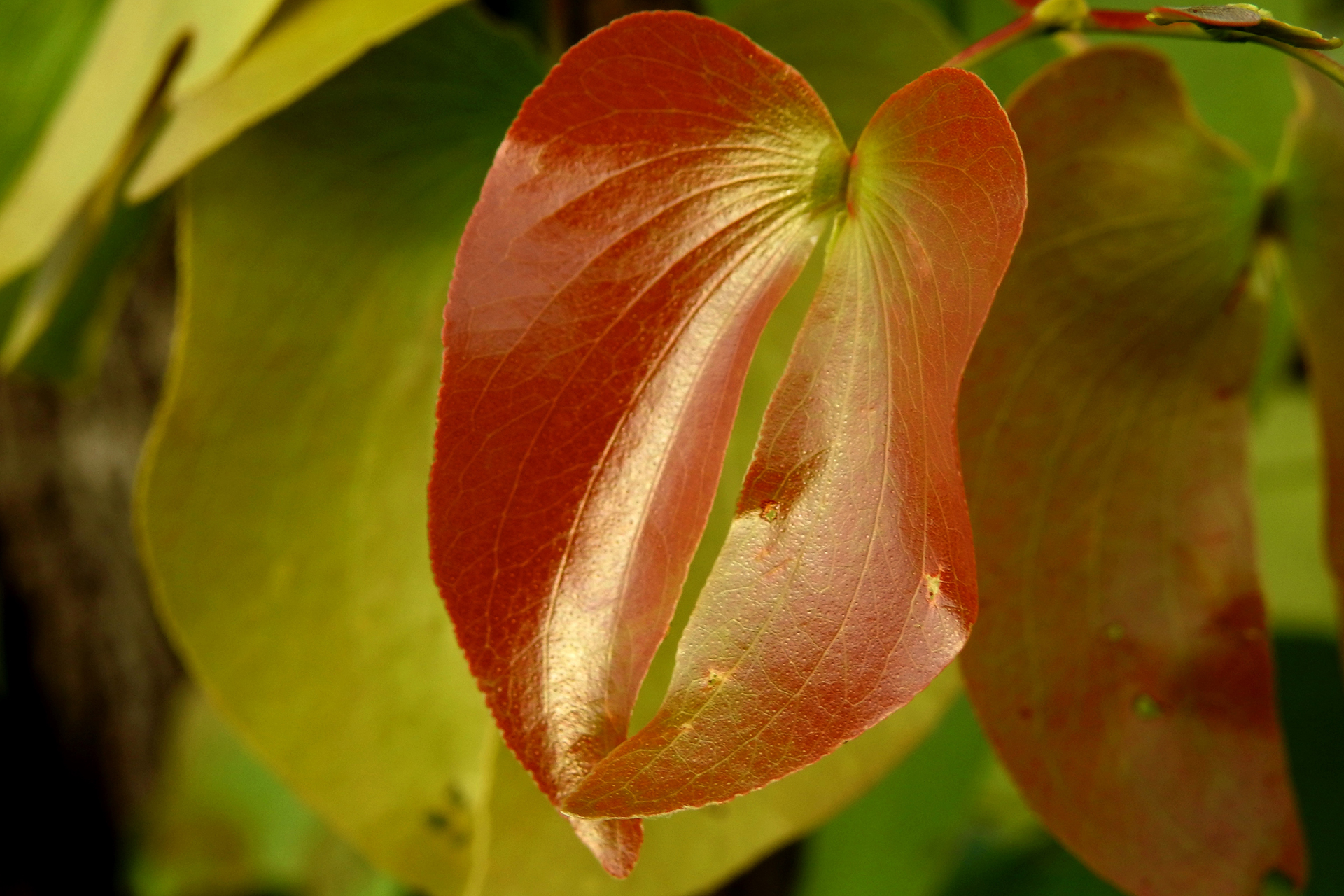
The butterfly shape of the mopane leaves is characteristic, but their changing colours across the season are another reason many people love them. Mopane trees are semi-deciduous, shedding their leaves late in the dry season in response to low soil moisture. Where soil moisture is good, some trees will retain their dark green leaves until just before the new leaves push them off. However, most trees have their leaves turn a beautiful orange-red, lasting only briefly on the trees before all falling to create a rust-coloured carpet across the ground. Then, those visiting in October or November might have the good fortune to catch the week when the mopane decide to push out their new leaves. These start as shiny pink triangles that shimmer in the sunlight, covering the tree stand in a glistening rosy layer. Within a week, they have pushed through to the brightest green, refreshing the landscape even before the rains begin.
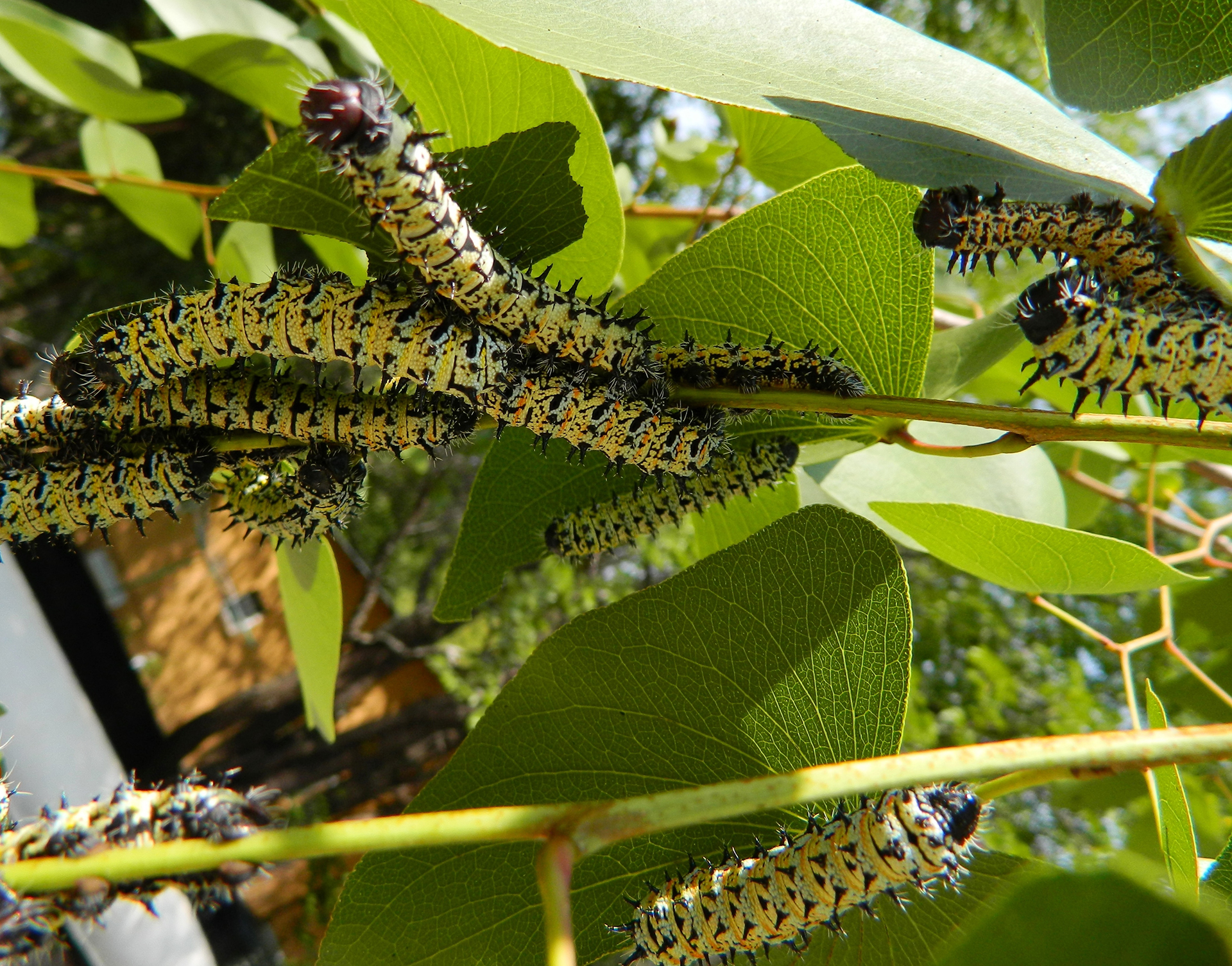
Turpenes notwithstanding, mopane trees are host to some interesting creatures. For birders wanting to see Arnot’s chat, mopane woodlands are the most likely place to find them. Although not very common, this little black-and-white bird is easy to spot against the greens and greys of the mopane woodlands. In summer, the mopane hosts the caterpillar of the Mopane moth, which is one of the large Emperor moths. The caterpillars are white, black, yellow, red and very spiky. Despite this, they are considered a delicacy, and in eastern Botswana and parts of Zimbabwe where they emerge in their thousands, they form part of an important cottage industry. The mopane also hosts a tiny stingless bee, which makes its nest in the hollow of old trees. In summer, the woodlands almost shimmer with the deafening sound of thousands of cicadas. An overlooked curiosity is a species of honey aphid that feeds on mopane seed pods. If you see a vervet monkey eating what looks like pods, it is more than likely simply scraping off the aphids for the sweet sap they store under their scales.
Mopane wood is much sought after for traditional building materials and tool-making. Its red heartwood is not only beautiful, but it is also very hard, making it resistant to termites. It also makes excellent firewood, with a good balance of flame and hot coal. Changes are, if you are sitting around a fire on safari, the wood will be mopane!
You may be wondering what this has to do with elephants. Well, elephants really like mopane trees. The leaves are protein-rich and are one of the first kinds of leaves available, as many other tree species wait for the rain before pushing new leaves. Mopane leaves are also among the last to fall at the end of winter. Even then, the leaves keep their protein content after they have fallen, which is why one can see many animals eating them off the ground.
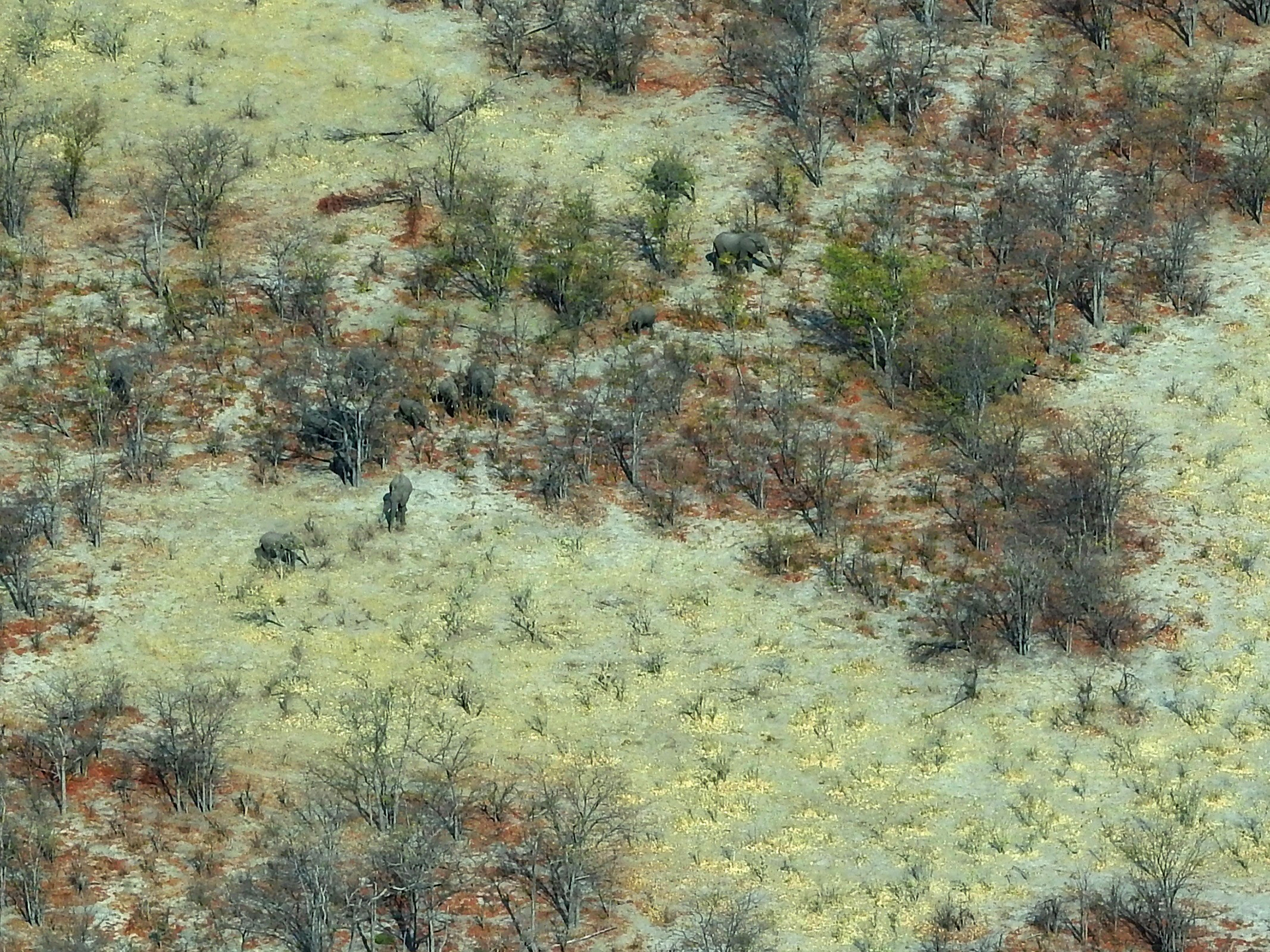
Generally, though, elephants feed by breaking off smaller branches, particularly from young saplings. Most tree species do not do well with this, and in some places with high elephant populations, proper recruitment of new saplings of acacias and other trees is disrupted by elephant browsing. However, in areas where both elephants and mopane are common, it is not unusual to find extensive stands of multi-stemmed mopane scrub. This branch-breaking is advantageous to mopane because it thrives on coppicing, allowing it to grow back strongly. Some biologists have suggested that elephants deliberately break these young mopane trees in order to keep them short and therefore accessible to young elephants, as a sort of nursery feeding lot. Whether or not the action is deliberate, the result is that the multi-stemmed trees have many more leaves available at lower heights, which does indeed allow youngsters easier access to high-nutrient fodder.
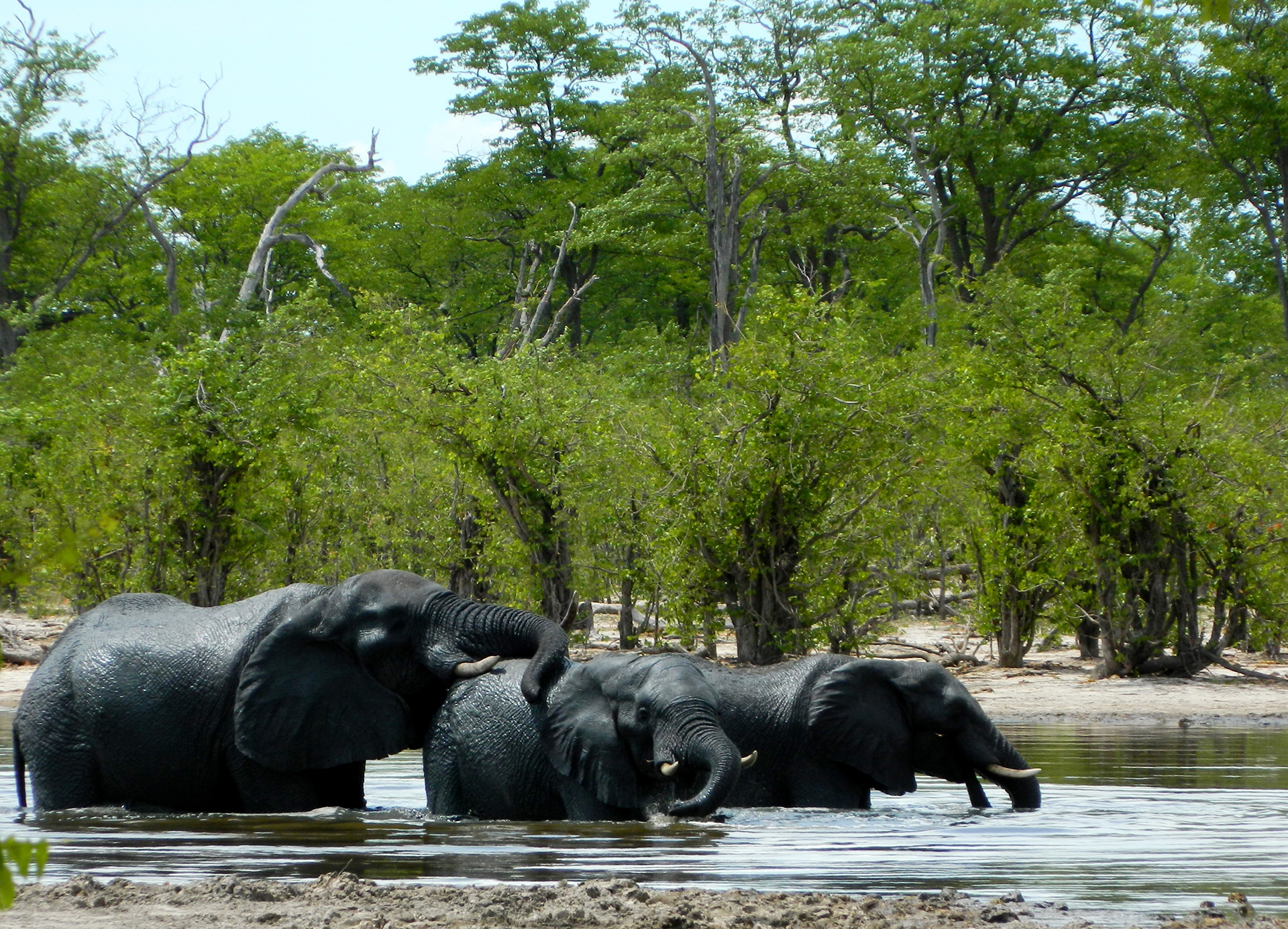
Elephants have been called “ecosystem engineers”, modifying their environment in ways that few other species (other than humans) do. Their heavy browsing leads to a decline in some species, and to an increase in mopane. Indeed, with mopane, there is a suggestion of a form of symbiosis – of two organisms whose interactions benefit both. Mopane is already expanding its range under global warming, with few frosts keeping its spread southward in check. As elephant populations in Botswana continue to grow, their expanding range is likely to be linked to that of mopane.
If we look at a grand, global scale, seeing African elephant populations expand and grow might be something we perceive as a ‘good’ thing in the context of their decline elsewhere on the continent. But as they change the landscape in ways that simplify it, or make it less useful to other species at the local level, they may reduce the biodiversity of an area. This we perceive as a ‘bad’ thing, since other species may lose the habitats and food they rely on. But in ecology, there is no ‘good’ or ‘bad’. Things just are. We allocate value through the meaning we bring, through our preferences. But sometimes these preferences are nuanced and can change depending on how we look at them
Local-level losses don’t mean that we shouldn’t protect elephants; indeed, we should. We have to find solutions that address the needs of both the local and the global level. It means exploring landscape-level approaches, such as supporting rural subsistence communities who must contend with crop depredation as elephants extend their range. Supporting human-elephant co-existence can increase the movement of the animals across the broader landscape, which allows other areas to recover from their intense browsing, creating a patchwork of habitat diversity that can further both global and local conservation needs.

Lin Cassidy is a Botswana citizen living in Maun. While much of her career has focused on conservation and development, she enjoys sharing her love for nature through words and art.